

Fuse




7 products
Best Sellers


Filter


Shopping Experience
Support 24/7
Online 24 Hours
Fast Delivery
Any Orders
Return Policy
30 Days Hassle-Free
Payment Method
Secure Payment
+
View more
Frequently Asked Questions
A fuse is a critical sacrificial safety component designed to protect an electrical circuit from damage caused by excess current (overload or short circuit). By intentionally breaking the circuit when current exceeds a specific safe limit, the fuse prevents irreversible damage to expensive electronics and mitigates the risk of electrical fires.
Selection is based on the application's amperage and mounting style:
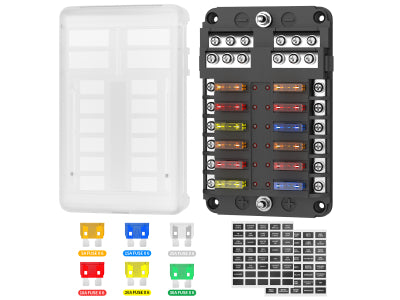
· Blade Fuses (ATC, ATO, Mini, Micro): The standard for most automotive branch circuits (lights, radios, wipers). They are plug-in style for easy replacement.
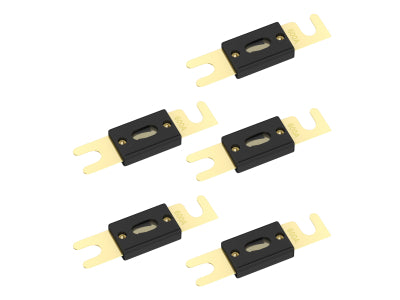
· Bolt-on Fuses (ANL, MIDI, MEGA): Designed for high-current main power lines (alternators, battery banks, winches). These range from 30A to 500A and are secured with bolts for a vibration-resistant, high-conductivity connection.
· Jcase Fuses: High-current cartridge-style fuses (available in Low or Tall profiles) commonly found in newer trucks and SUVs to protect circuits like cooling fans or starter motors.
· Blade Fuses (ATC, ATO, Mini, Micro): The standard for most automotive branch circuits (lights, radios, wipers). They are plug-in style for easy replacement.
· Bolt-on Fuses (ANL, MIDI, MEGA): Designed for high-current main power lines (alternators, battery banks, winches). These range from 30A to 500A and are secured with bolts for a vibration-resistant, high-conductivity connection.
· Jcase Fuses: High-current cartridge-style fuses (available in Low or Tall profiles) commonly found in newer trucks and SUVs to protect circuits like cooling fans or starter motors.
Automotive blade fuses follow an industry-standard color-coding system to ensure easy identification of their amperage rating. For example, Tan=5A, Red=10A, Blue=15A, Yellow=20A, Clear=25A, and Green=30A. Always verify the amperage number stamped on the top of the fuse housing to ensure a precise match before installation.
Most fuses feature a transparent or semi-transparent housing for quick visual inspection. A healthy fuse has a continuous metal filament (the "U" or "S" shaped wire) inside. If the fuse is blown, the filament will be visibly broken, and there may be dark scorch marks or a melted appearance inside the housing.
Electrical faults can occur unexpectedly. Maintaining a fuse assortment kit provides immediate access to a wide range of amperage ratings (e.g., 2A to 40A) in one organized container. This eliminates the need to visit a shop for a single replacement, ensuring that a simple blown fuse doesn't leave a vehicle or marine vessel stranded or without critical accessories (like headlights or GPS).
No. You must always replace a blown fuse with another fuse of the exact same amperage rating. Installing a higher-amperage fuse (e.g., replacing a 10A fuse with a 20A fuse) allows more current to flow than the circuit's wiring is designed to handle, which can lead to overheating, melted insulation, and electrical fires.


