

Distribution Blocks




50 products
Best Sellers


Filter


Shopping Experience
Support 24/7
Online 24 Hours
Fast Delivery
Any Orders
Return Policy
30 Days Hassle-Free
Payment Method
Secure Payment
+
View more
Frequently Asked Questions
While these terms are often used interchangeably, they serve slightly different roles:
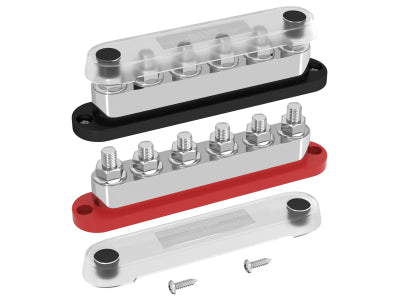
· Busbars: Typically consist of a solid metal bar (often tin-plated copper) with multiple studs or screws. They are used to consolidate multiple return wires or distribute power from a single source to many circuits, often used for grounding or main power distribution.
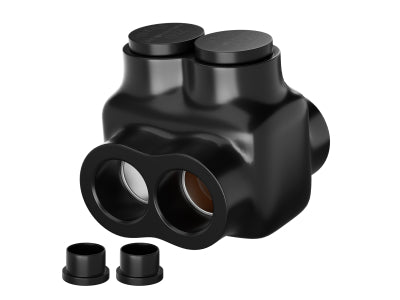
· Distribution Blocks: Usually feature a single large input port and several smaller output ports, often housed in an insulated casing (common in car audio or industrial control panels). They are designed to "split" one heavy-gauge power cable into multiple smaller-gauge wires.
· Busbars: Typically consist of a solid metal bar (often tin-plated copper) with multiple studs or screws. They are used to consolidate multiple return wires or distribute power from a single source to many circuits, often used for grounding or main power distribution.
· Distribution Blocks: Usually feature a single large input port and several smaller output ports, often housed in an insulated casing (common in car audio or industrial control panels). They are designed to "split" one heavy-gauge power cable into multiple smaller-gauge wires.
Connecting too many ring terminals to a single battery post creates a "rat’s nest" of wiring, which is prone to vibration, loose connections, and short circuits. Using a centralized distribution block or busbar cleans up the wiring layout, ensures a secure and low-resistance connection for every accessory, and makes troubleshooting significantly easier.
The busbar must be rated higher than the total simultaneous load of all connected accessories. For example, if you have multiple devices drawing a total of 200A, a 250A or 300A busbar is required. Using an undersized busbar can lead to overheating and electrical failure. Most units are rated for 12V-48V DC systems, making them ideal for automotive, marine, and solar applications.
These represent the diameter of the mounting studs: M6 (1/4"), M8 (5/16"), and M10 (3/8"). It is essential to match the hole size of your ring terminals to the stud size on the busbar. Using the correct size ensures maximum surface contact, which minimizes electrical resistance and heat buildup.
High-quality distribution blocks utilize tin-plated copper bars and stainless steel hardware. Tin-plating provides superior protection against oxidation and corrosion, which is critical for marine (saltwater) or outdoor environments. The bases are typically made of reinforced nylon or ABS plastic to provide high mechanical strength and excellent insulation.
Yes. The included red and black covers are vital for safety. They prevent accidental short circuits caused by tools or metal objects touching the live studs. Additionally, color-coded covers help to immediately distinguish between positive (Red) and negative/ground (Black) distribution points, reducing the risk of cross-wiring during maintenance.


