Fuse Holder & Block

Protect Your Circuits, Maximize Your Safety

Fuse holders are essential devices designed to securely hold and connect fuses, providing crucial protection against overcurrents and short circuits in a wide range of electrical systems. A comprehensive selection of fuse holders accommodates various fuse types, including blade, bolt, cartridge, link, radial, rectangular, threaded, and more. Termination options are diverse, including bolt-on, cartridge lug, crimp, PC pin, quick connect, screw, solder, wire, and through-hole, ensuring compatibility with specific wiring needs. Fuse sizes available include mini ATO, ATC, and many other various sizes.

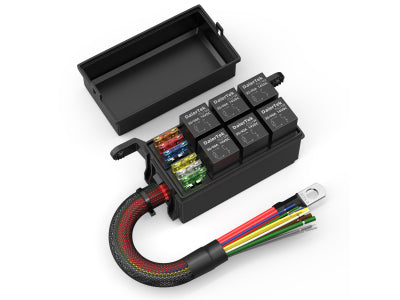
Looking for a robust power distribution solution? Fuse blocks are designed to distribute power to multiple circuits, providing a centralized and organized solution for electrical systems. Each circuit is protected by an individual fuse, ensuring that voltage spikes and shorts will not damage wiring and system components. Fuse blocks are ideal for automotive, marine, RV, solar, and other demanding applications, providing reliable and efficient power distribution in even the most challenging environments. An extensive selection features a wide range of stud and screw configurations to meet specific needs.

+ View more
19 products

Fuse Holders & Blocks: The Backbone of Electrical Circuit Protection

Safeguard Your Electrical Systems and Simplify Wiring

In any DC electrical setup, circuit protection is non-negotiable. Fuse holders and blocks serve as the critical gatekeepers of your system, preventing catastrophic damage from overcurrents and short circuits. Whether outfitting a marine dashboard, wiring a high-end car audio system, or simply adding a dashcam, a high-quality fuse assembly ensures that a minor electrical fault doesn't turn into a melted wire harness or a fire hazard. Beyond safety, these components are essential for creating clean, organized, and accessible wiring layouts.

Comprehensive Solutions for Every Power Level

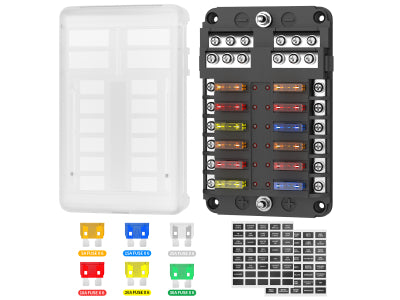
Multi-Way Fuse Blocks with LED Indicators: For organizing multiple accessories, blade fuse blocks (6-way, 12-way) are the industry standard. Featuring integrated negative bus bars and blown fuse LED indicators, these units allow you to instantly identify and replace a tripped fuse, eliminating guesswork in dark or cramped spaces.

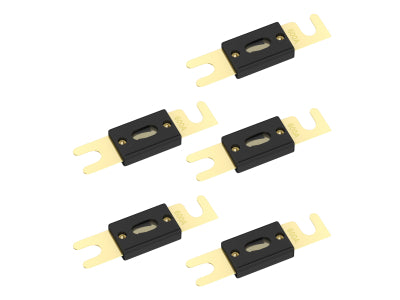
High-Amperage Protection: For main battery connections, inverters, and heavy loads, utilize ANL fuse holders, MEGA/AMG holders, and MRBF terminal fuses. Designed with heavy-duty studs (M8/M10), these blocks handle massive currents (up to 500A), ensuring stable power delivery for demanding applications like winches and amplifiers.

Waterproof Inline Holders: Perfect for protecting individual circuits in harsh environments. Inline fuse holders come with tight-fitting rubber caps to seal out moisture and dust, making them ideal for under-hood applications or exposed marine wiring.

Add-A-Circuit Fuse Taps: The safest way to add a new accessory without cutting factory wires. These "piggyback" adapters plug directly into your existing fuse box, turning one slot into two, providing a dedicated protected circuit for devices like radar detectors or GPS units.

Versatile Applications Across Industries

Reliable circuit protection is universally required across all 12V/24V sectors:

  • Automotive & Off-Road: Cleaning up "spaghetti wiring" in engine bays and consolidating controls for auxiliary lights and compressors.
  • Marine & Boating: protecting sensitive navigation electronics and bilge pumps from saltwater corrosion and electrical surges using marine-rated blocks.
  • Car Audio: delivering safe, high-current power to amplifiers and subwoofers using robust ANL or MIDI fuse holders.
  • Solar & RVs: protecting battery banks and charge controllers in off-grid energy systems.

Selecting the Right Fuse Holder

Choosing the correct protection depends on the current load and environment. For low-amperage accessories (under 30A), standard ATO/ATC or Mini blade fuse holders are sufficient. For high-power distribution (over 100A), opt for bolt-down fuse blocks like ANL or Class T to minimize resistance. Always ensure the wire gauge (AWG) matches the holder's capacity to maintain system safety and efficiency.


+ View more

Frequently Asked Questions

Fuse holders and blocks serve as the essential "gatekeepers" of an electrical system. They are designed to house a sacrificial fuse that breaks the circuit in the event of an overcurrent or short circuit. This critical safety mechanism protects expensive electronic components from permanent damage and mitigates the risk of electrical fires in vehicles, boats, and RVs.
The choice depends on the complexity of the electrical project:
· Inline Fuse Holders: Ideal for protecting a single dedicated circuit (e.g., a single light bar or a water pump) in a compact or hard-to-reach area.
· Multi-way Fuse Blocks: Designed for organizing and protecting multiple circuits from a centralized location. They consolidate wiring, making them the preferred choice for full vehicle or cabin electrical upgrades.
Standard blade fuses (ATC/ATO) are generally used for low-to-medium amperage accessories (under 30A). For high-power applications such as car audio amplifiers, power inverters, or winches, ANL or MIDI fuse holders are required. These heavy-duty units are designed to handle currents ranging from 30A up to 500A, providing robust protection for main power distribution lines.
Fuse blocks with LED warning indicators significantly simplify troubleshooting. Under normal operation, the LEDs remain off. If a fuse blows, the corresponding LED illuminates red, allowing for immediate visual identification of the failed circuit. This is particularly valuable in dark engine bays or cramped storage compartments.
Fuse taps (or "piggyback" adapters) allow for the addition of new accessories—such as dashcams, GPS units, or radar detectors—without cutting or splicing the vehicle’s factory wiring. The adapter plugs directly into an existing slot in the OEM fuse box, providing two fused outlets: one for the original circuit and one for the new accessory, ensuring both remain protected.
Yes, wire gauge is critical for safety. The wire connected to the fuse holder must be rated to handle the maximum current load of the circuit. Using a fuse with a higher rating than the wire’s capacity can lead to wire overheating and potential fire. Always ensure that the fuse rating is appropriate for both the connected device and the wire gauge being used.

You May Also Like